For a long time, my dad has struggled with chronic back pain. Despite that, one thing we've always loved doing together is playing golf. But his back issues made walking the course difficult, and using a powered golf cart meant we weren't spending time together. This project was born from a simple question: what if my dad could still walk the course without having to carry or push his bag?
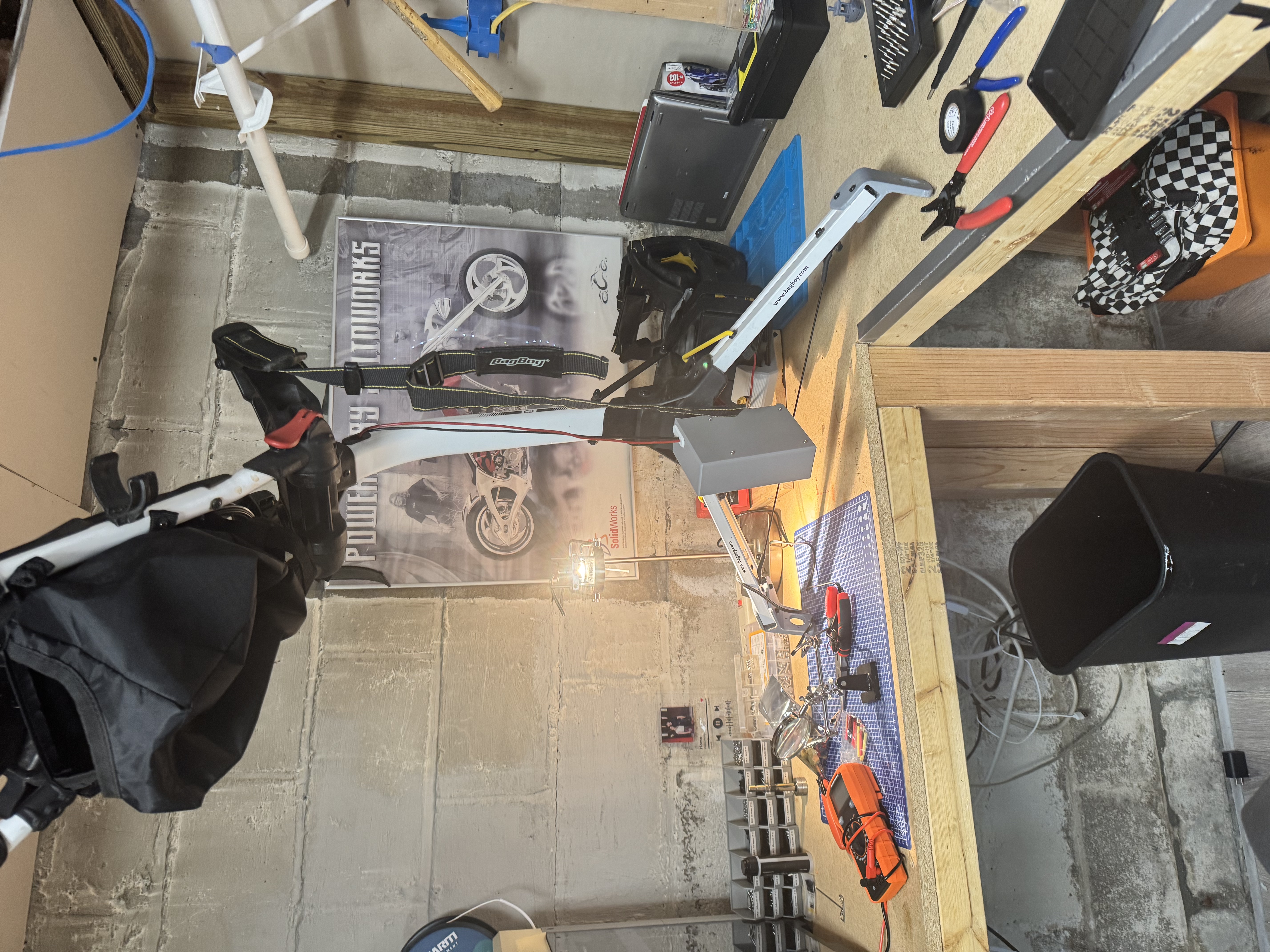
Electric Cart In Progress
My dad's chronic back pain made carrying a golf bag impossible and pushing a standard cart difficult due to the constant forward lean required.
Using a powered golf cart meant we weren't walking together — the conversations, jokes, and quiet moments on the fairway were all lost.
Electric push carts on the market cost around $1,500 and offered little innovation — something that could be built for a fraction of the price.
Build a fully functional, Wi-Fi-controlled electric golf push cart from the ground up — customized exactly to what my dad needed.
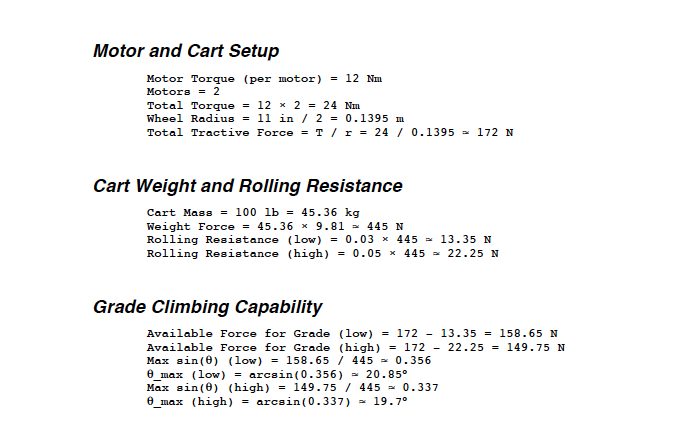
I began by calculating the amount of torque and force required to move the cart up different slopes, factoring in the weight of the golf bag, the cart, and the incline of the course. After several calculations, I had a good set of numbers that defined what kind of motors I'd need and how powerful the system would have to be.
No cables between controller and cart
Integrate seamlessly with existing cart
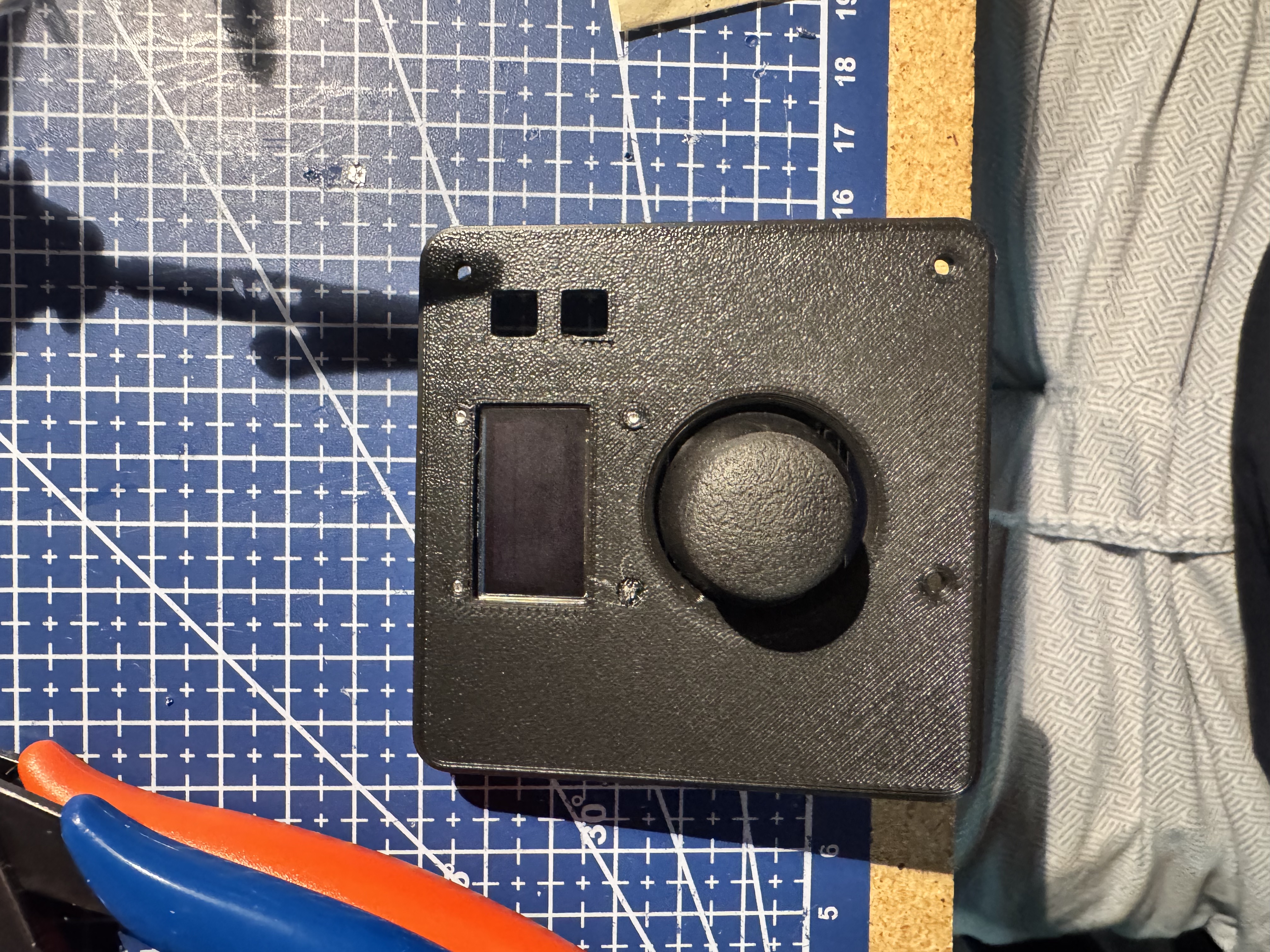
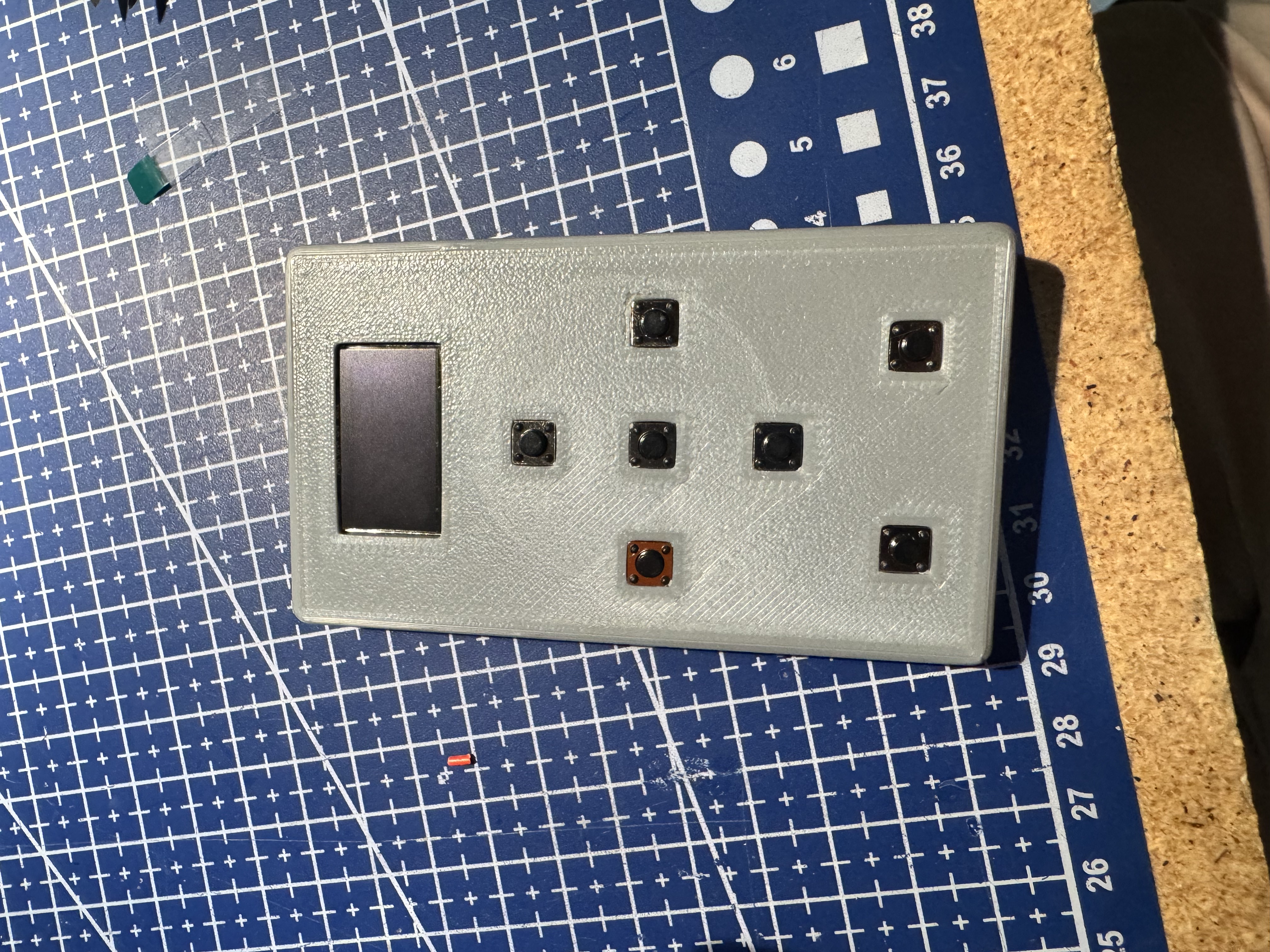
Intuitive handheld remote control
Multiple rounds without recharging
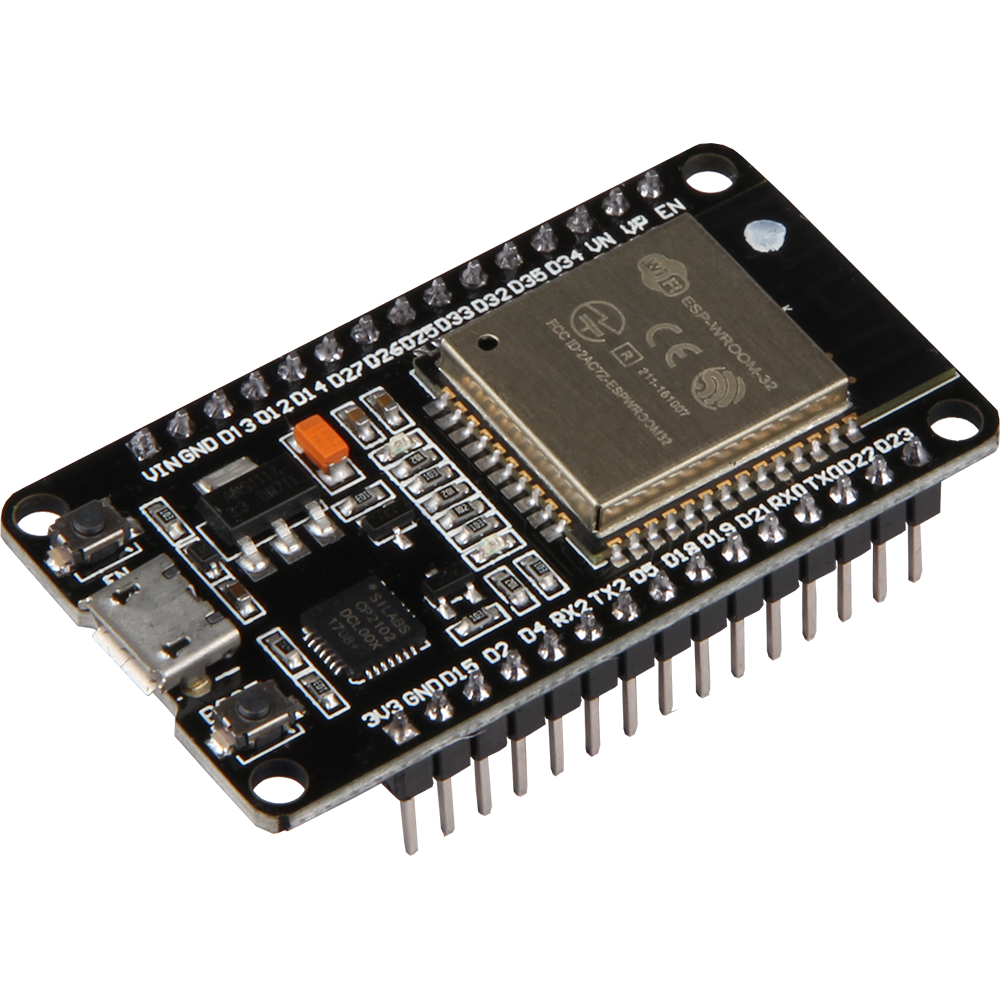
Purpose: Wireless Communication
Two ESP32s — one in the handheld controller and one in the cart — connected via Wi-Fi for responsive, long-range communication while keeping the system simple and modern.
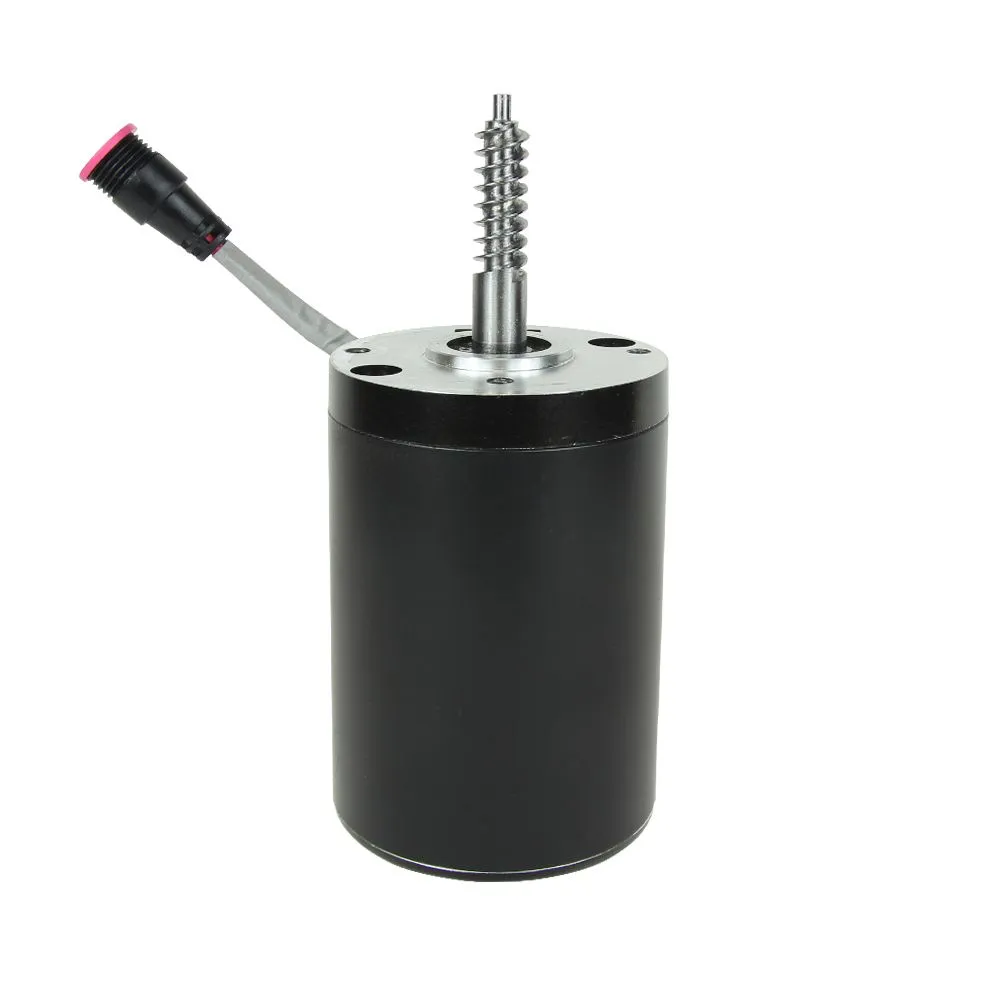
Challenge: Initial Motor Failure
First motors from China had misleading specs — advertised torque was only instantaneous, not sustained. Replaced with higher-quality motors capable of handling the actual load requirements.
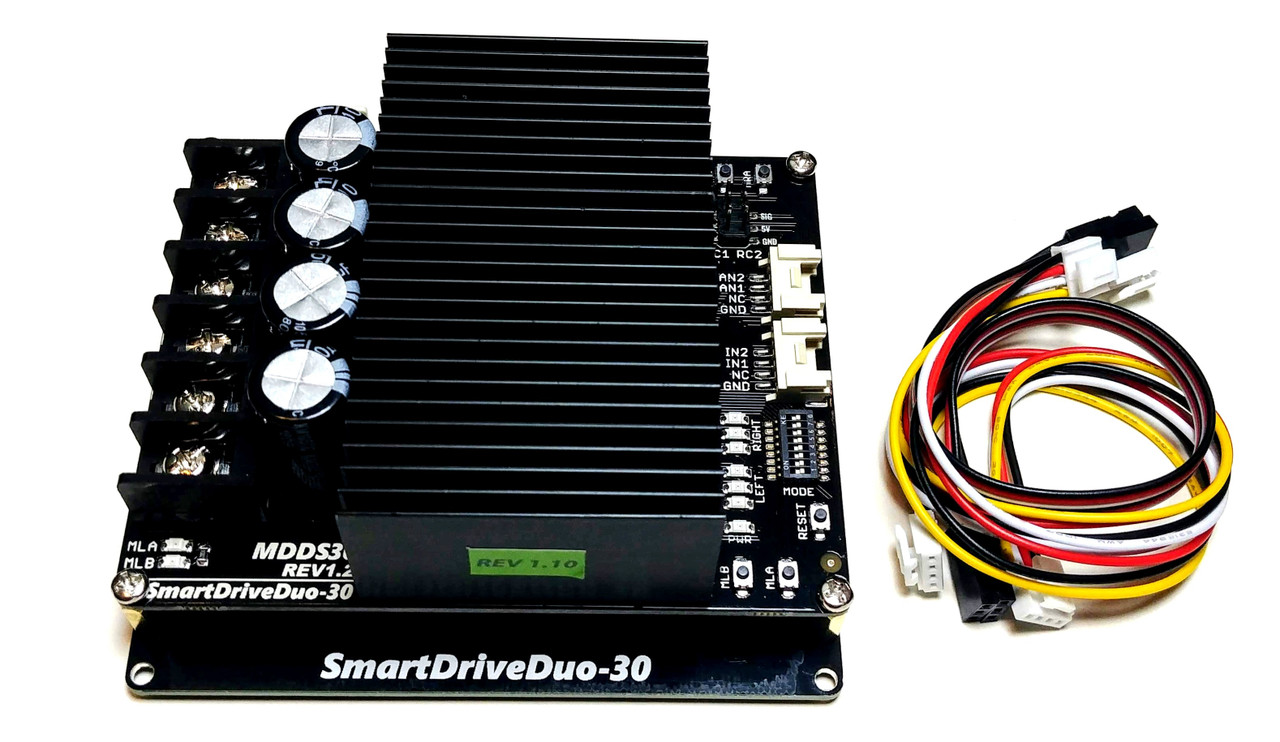
Reliability: One of the Best Parts
Compact design that stayed cool under load with all components rated for much higher voltage than used. Proved to be one of the most reliable parts of the system.
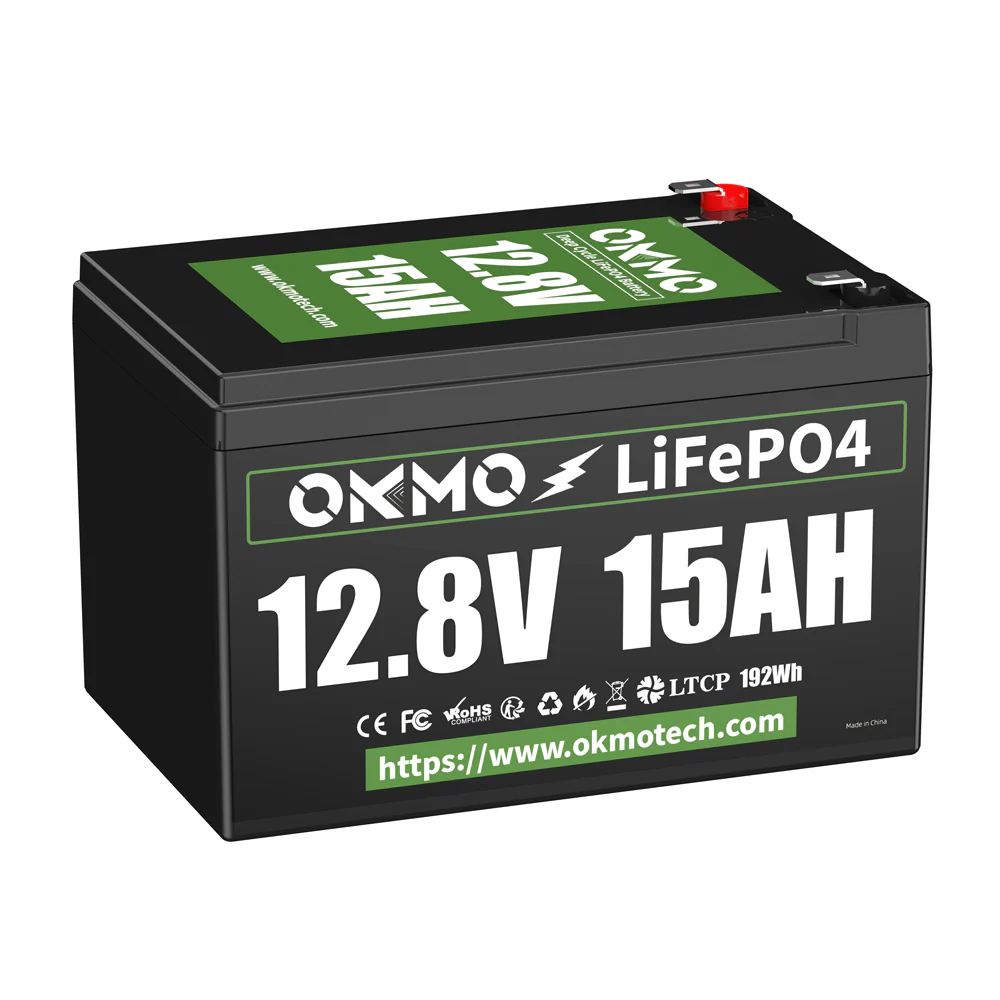
Specs: 24V, 15Ah LiFePO4
Two 12-volt LiFePO4 batteries wired in series, providing enough capacity to last through roughly two full rounds of golf on hilly terrain without recharging.
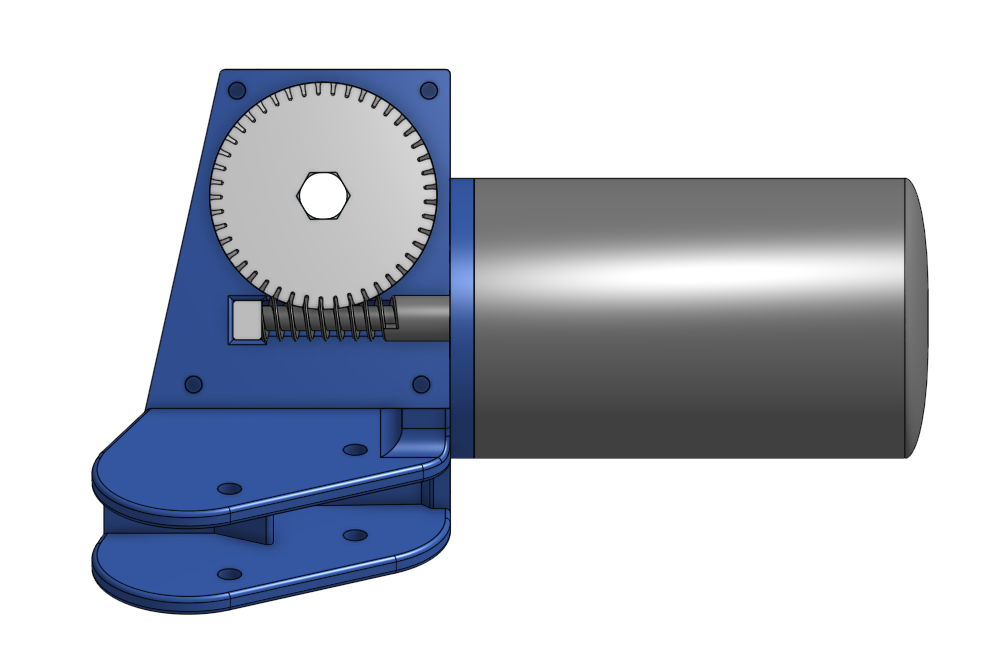
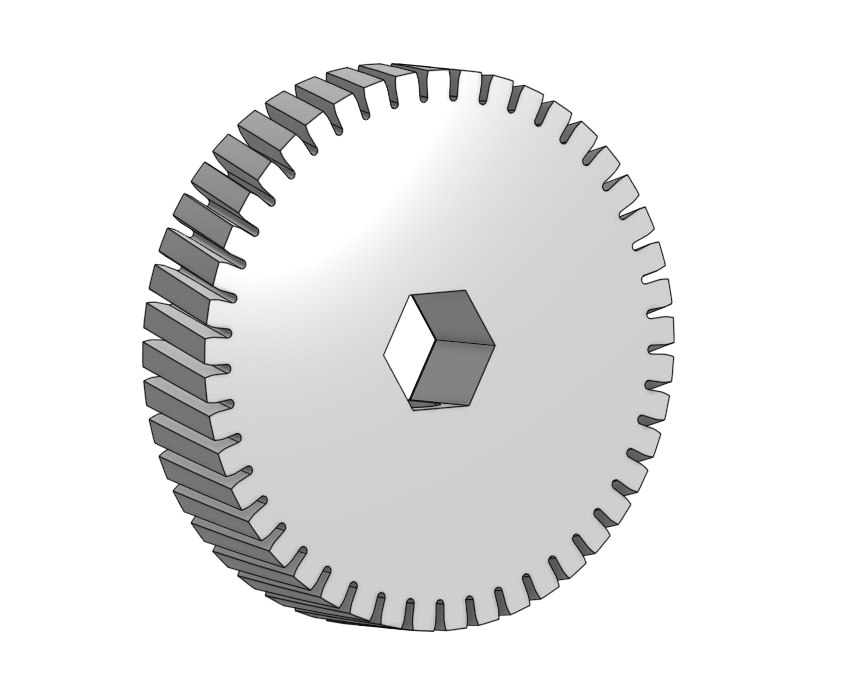
The motor change created a new engineering challenge. The new motors were direct-drive, meaning they lacked built-in gear reduction. To get the necessary torque, I needed to design my own gearbox.
Perfect balance of torque multiplication and speed
Well above walking speed for any terrain
Capable of handling steep inclines with full load
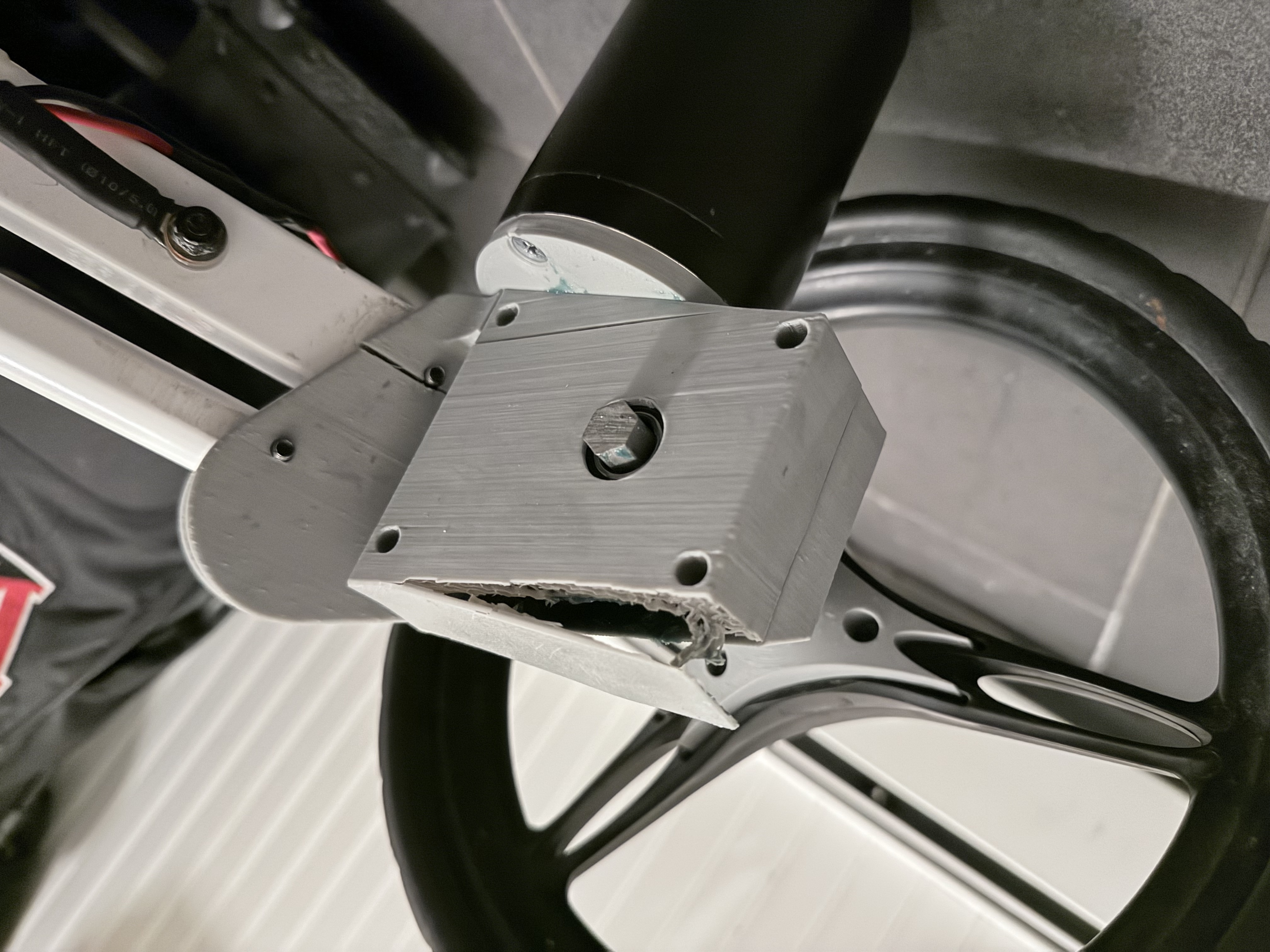
Problem: Standard printed parts couldn't handle the torque. Gears would strip repeatedly, with layer lines splitting under stress.
Challenge: Countless nights of reprinting, reassembling, and testing, only to watch the same failure happen again.
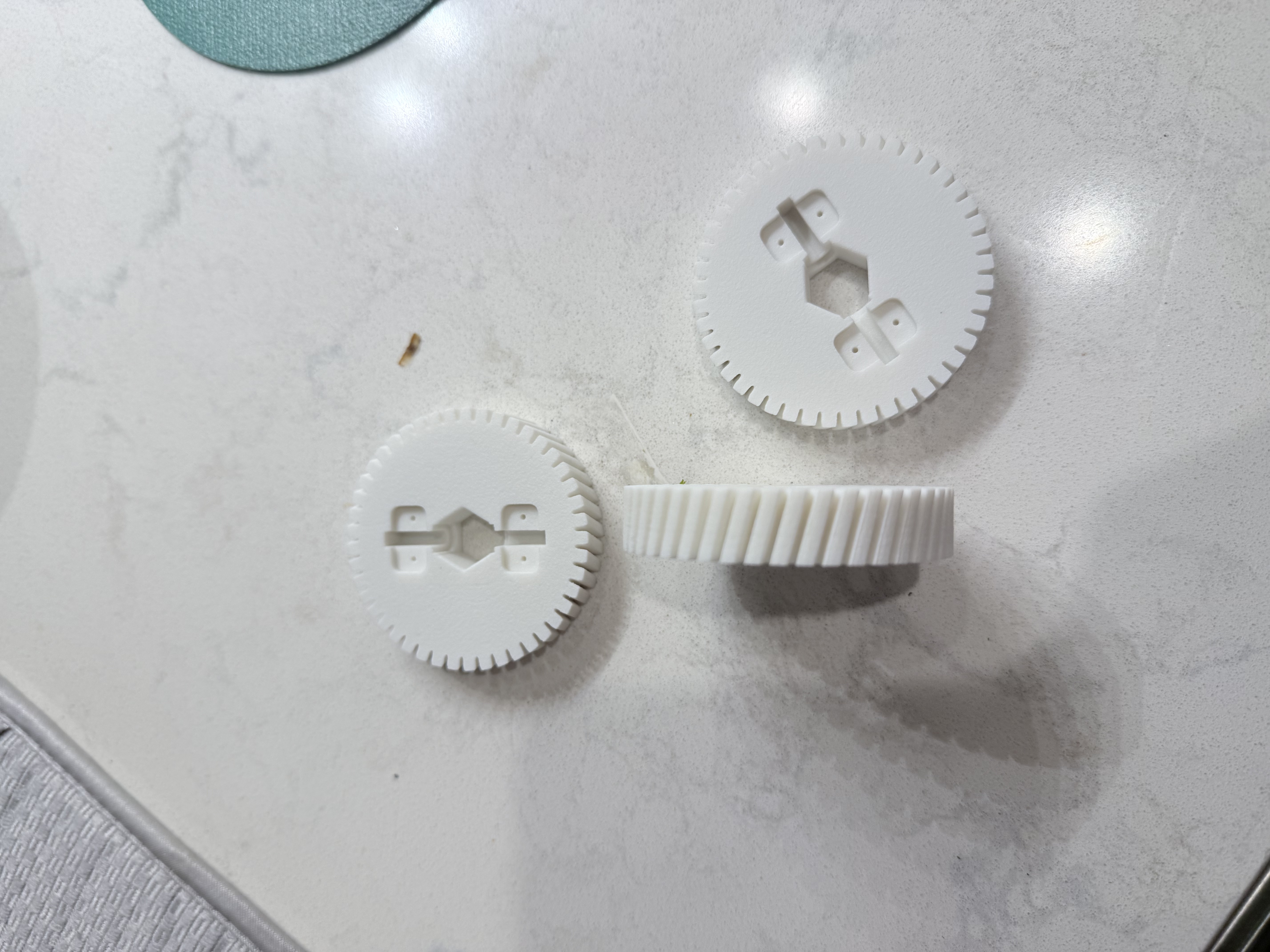
Solution: Pivoted to Selective Laser Sintering with carbon-composite material for higher strength and heat resistance. Applied marine grease for smooth operation.
"Watching the wheels turn smoothly for the first time felt like the payoff for every late night spent tweaking the design."
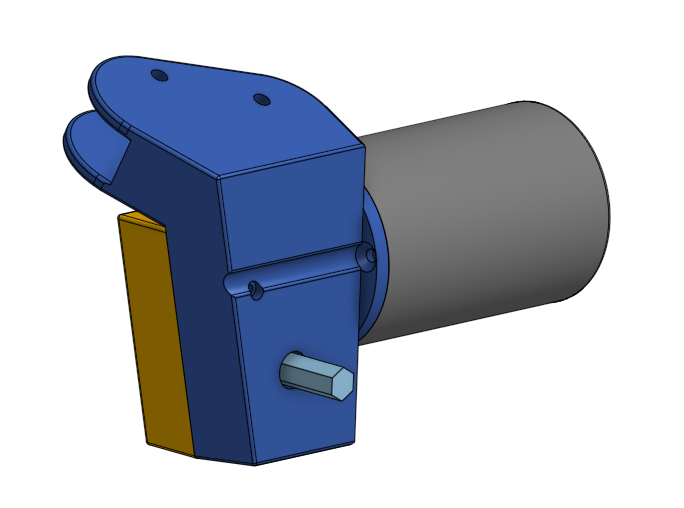
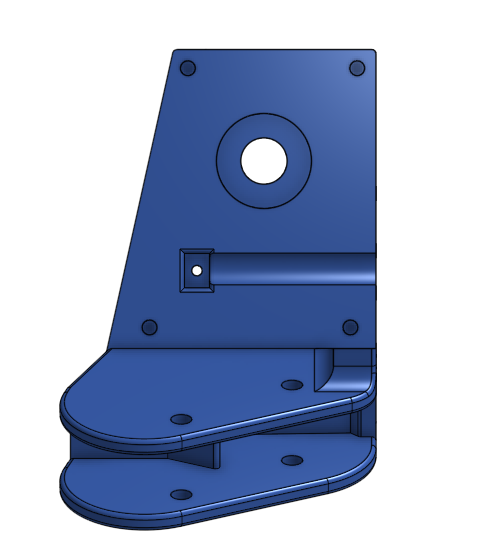
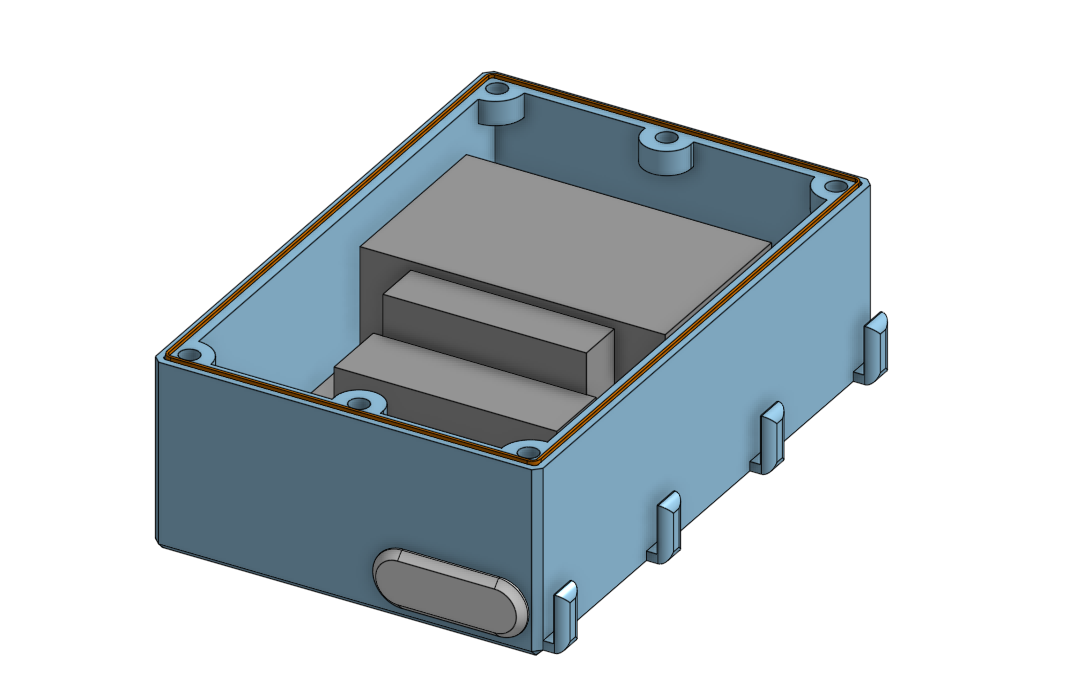
Once I had the components figured out, I began building everything in Onshape, designing each bracket, motor mount, and housing from scratch. The process went through many iterations — weeks spent refining the designs to make them lighter, easier to print, and more durable.
Motor Mount Design
Custom Brackets
Electronics Housing
The controller communicated reliably with the cart over Wi-Fi, and the motors delivered smooth, steady motion even on hills.
My dad could walk beside me during an entire round without having to push or carry anything. The cart followed him effortlessly.
For the first time in a long time, my dad could walk the course pain-free, and we could spend that time together — talking, laughing, and sharing the game we love.
Dual ESP32 Wi-Fi system
24V, 15Ah LiFePO4
36:1 worm gear reduction
~10 MPH maximum
2+ full rounds
2" × 2" pocket-sized
"It wasn't just a project anymore — it was a solution that changed the way we experienced the game."
What started as a simple idea to make golf easier for my dad became a deep engineering challenge — involving mechanical design, electrical systems, embedded programming, and problem-solving at every level. But beyond all the technical details, what made it meaningful was the personal motivation behind it.
Every gear, wire, and line of code represented not just a piece of a machine, but a way to restore something important to both of us — time together.
And that, more than anything, is what made it worth building.
Custom gearbox, mounts, and brackets
Power distribution, motor control, battery management
ESP32 Wi-Fi communication, control systems
Multiple design revisions and material testing
Onshape modeling and assembly
3D printing, SLS printing, assembly